
Residential Values, Commercial Costs in Washington
Washington Residential Home Values
In November 2025, total property inventory across the Northwest MLS rose 24% year-over-year to 15,557 active listings, with Snohomish, Thurston, Jefferson, and Clallam counties posting some of the strongest gains. Market activity softened during the same period: closed sales fell 10.6% from last year, and the median sale price declined 2.3%. Mortgage conditions offered slight relief, with the national average 30-year rate stabilizing near 6.2% per Freddie Mac, down from just over 7% at the start of 2025, and Seattle area rates appearing marginally lower according to Bankrate.
National pricing trends remain mixed. Zillow reports that over half of U.S. homes have lost value year-over-year, though only about 4% have actually sold for less than their previous purchase price. As usual, the data can be sliced and diced to produce different "vibes", but the gist seems to confirm the prevailing theory that buyers are reluctant to pay current prices at current mortgage rates, while sellers are reluctant to face a lower selling price than they have been led to expect after the last decade of activity. We have observed previously that momentum seemed to favor the buyers on average and prices were ticking lower in the short/medium term. This may have to continue in order for the market to clear and transactions to pick up, but psychology is a hugely important and stubborn factor for an asset class that represents the largest allocation in most homeowners' portfolios.
Seattle Commercial Construction Costs: Mortenson Reports Minimal Increase
On the commercial scene, construction costs in the Seattle commercial property sector seemed to moderate last quarter, and are expected to continue the trend in the near-term.
Both material and labor costs saw mild upward movement last quarter, according to a cost report from general contractor Mortenson: "The Seattle Mortenson regional office reported only a nominal cost increase of +0.88% this quarter." Material prices rose slightly, influenced in part by tariff-related pressure in specific categories such as steel reinforcement components, while labor costs held relatively steady thanks to consistent workforce availability and limited wage escalation. According to the report, "Contractors continue to report consistent bidding activity, while owners are showing greater confidence in advancing projects that were previously delayed or under review."
The following graphic shows historical cost trends:
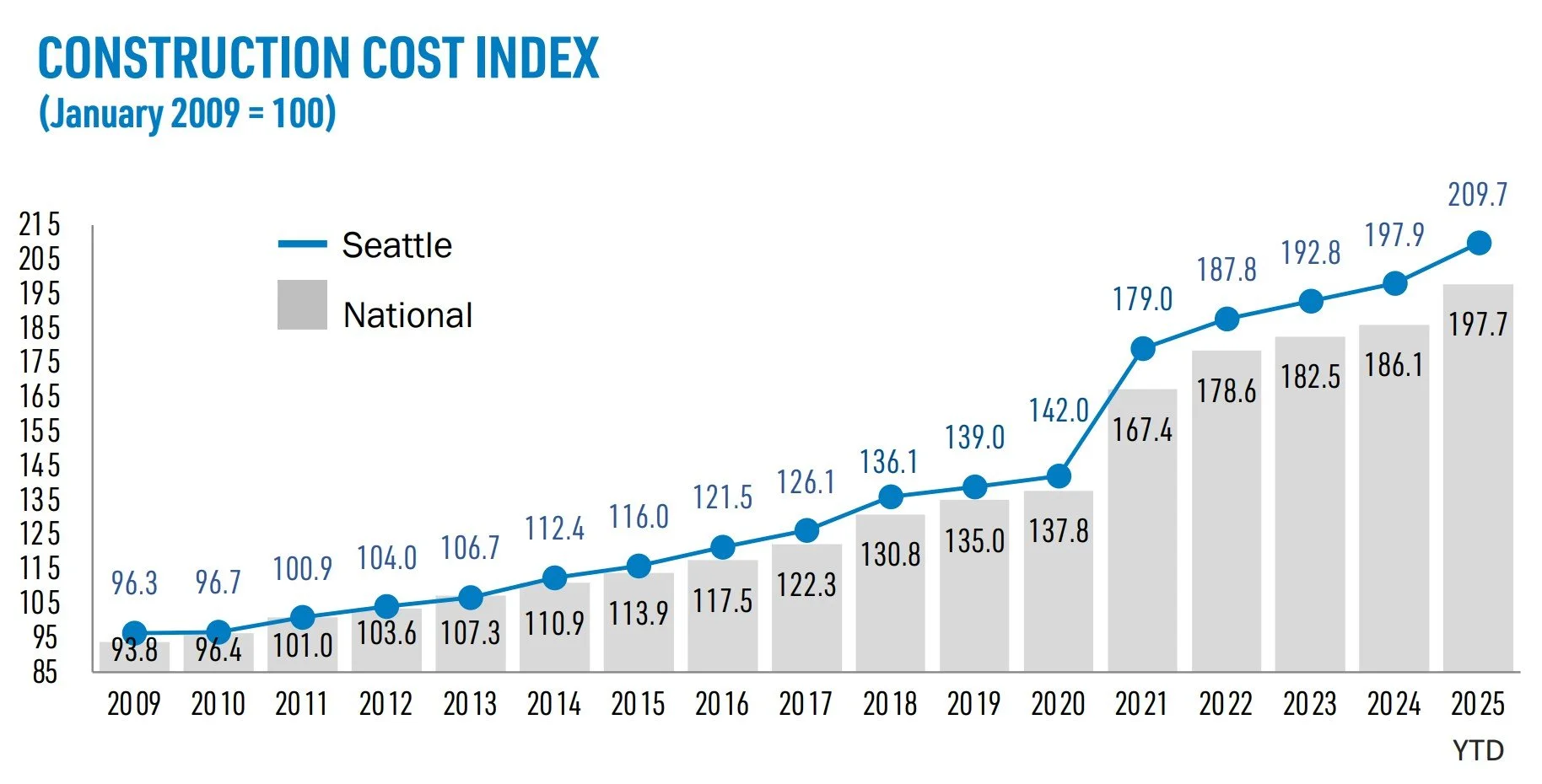
Source: Mortenson